
Hibaaq Osman
CEO and Founder, Karama
Advisor, Feminist Foreign Policy Collaborative
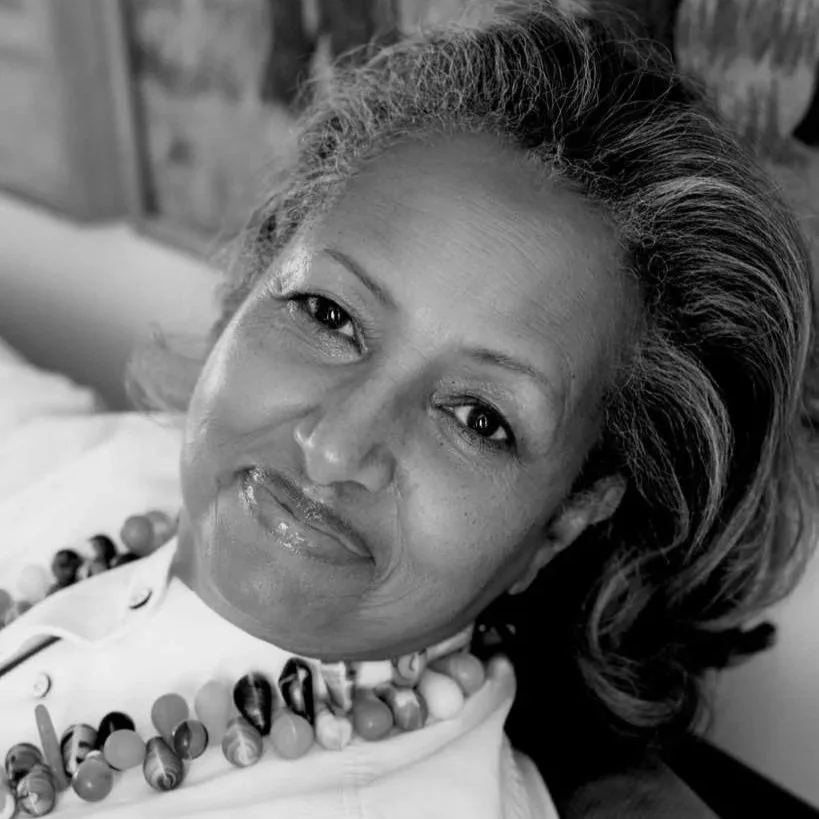
Hibaaq Osman (she/her) is a Somali global political strategist, feminist movement builder and one of the leading voices challenging the failures of the international system in responding to conflict, injustice and the deepening crisis of multilateralism. She is the Founder and CEO of Karama, a regional feminist movement and political platform advancing women’s leadership, peacebuilding and influence in governance and decision-making across Africa and the Arab region.
For more than two decades, she has worked at the intersection of grassroots mobilization, diplomacy and high-level political advocacy, building and strengthening feminist movements while connecting local struggles to regional and global policy spaces. Her work focuses on Women, Peace and Security (WPS), feminist foreign policy (FFP), democratic governance, justice and accountability and the political dimensions of peace processes in conflict-affected regions.
Under her leadership, Karama has evolved into a respected regional force and movement-building platform, bringing together women leaders, civil society actors, policymakers, academics and multilateral institutions across some of the world’s most politically fragile and conflict-affected contexts. Through this work, she has helped support women’s participation in peace negotiations, constitutional reform, transitional justice, national action plans on UNSCR 1325 and broader struggles for political inclusion and social justice.
Hibaaq has emerged as a strong political voice on the growing crisis of multilateralism and the widening gap between international rhetoric and political reality. Her recent work critically examines the limitations of feminist foreign policy when it fails to translate into meaningful action during war, occupation, authoritarianism and humanitarian collapse. She has consistently argued that feminist diplomacy cannot coexist with double standards on international law, militarization, selective accountability and the exclusion of women and civil society from political decision-making.
She has engaged extensively with the United Nations system, regional organizations, governments and global civil society coalitions, while remaining deeply committed to amplifying voices from the Global South. Her political analysis emphasizes the need to decolonize feminist discourse, strengthen regional feminist leadership and reshape global governance through more equitable, accountable and people-centered frameworks.
Known for combining political strategy with movement-building, Hibaaq is widely recognized for convening difficult conversations across ideological and institutional divides, while remaining grounded in the realities faced by women and communities living through conflict, displacement, repression and political transition.