
Feminist Foreign Policies Ride the Global Progressive Movement
By Spogmay Ahmed, Deputy Director, Feminist Foreign Policy Collaborative
Originally published in PassBlue on July 20, 2026
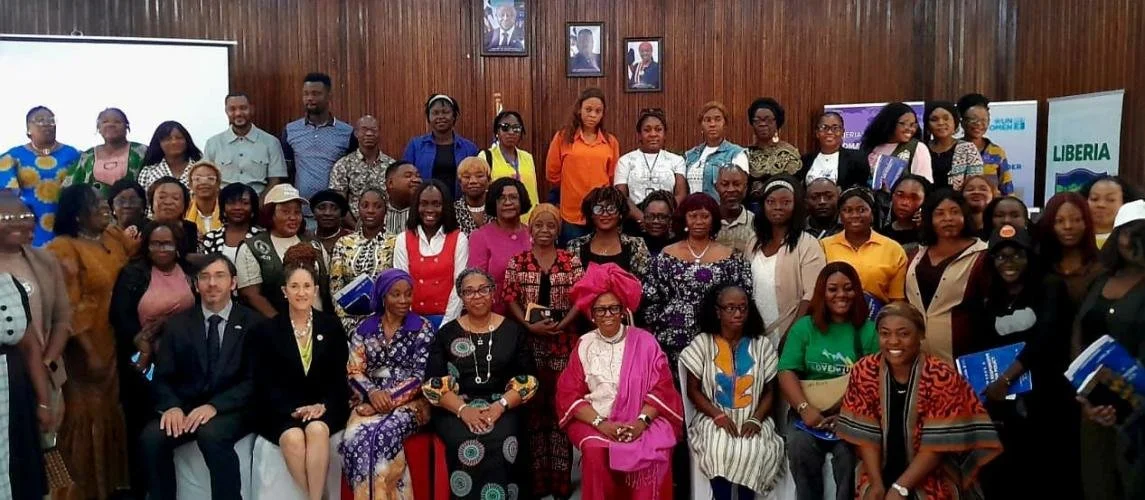
Liberia reaffirmed its stance on gender equality in diplomacy and governance through its feminist foreign policy and other steps taken by the Ministry of Foreign Affairs, in Monrovia, in October 2025, above. The essayist writes that the recent conference in Madrid focusing overall on FFP, as it’s called, resulted in a declaration by 28 countries asserting an “unflinching willingness to meet the moment.” Photo by: The Ministry of Foreign Affairs of Liberia
For progressive movements, foreign policy has emerged as a major site of contestation, increasingly swaying votes in national elections, drawing mass attention and fueling public debate. Among the most intriguing levers of the progressive foreign policy movement — which prioritizes diplomacy and the protection of human rights over military intervention — is the continuing effort to urge countries to adopt a feminist foreign policy.
Feminist foreign policy was first introduced to the world stage by Sweden in 2014 and has since been embraced across all United Nations blocs. As an alternative foreign policy framework prioritizing peace, human rights and gender equality, feminist foreign policy has withstood the tests of time, with 10 governments still committed to the bold agenda.
In the Americas, these include Canada, Chile, Colombia and Mexico; in Europe, France, Germany, Scotland, Slovenia and Spain; and the latest edition, Liberia in Africa. Feminist foreign policies have expanded opportunities for civil society to shape policy priorities; fostered cross-regional cooperation among governments around shared values; and provided a platform to interrogate the very foundations of foreign policy and national security.