About the Event
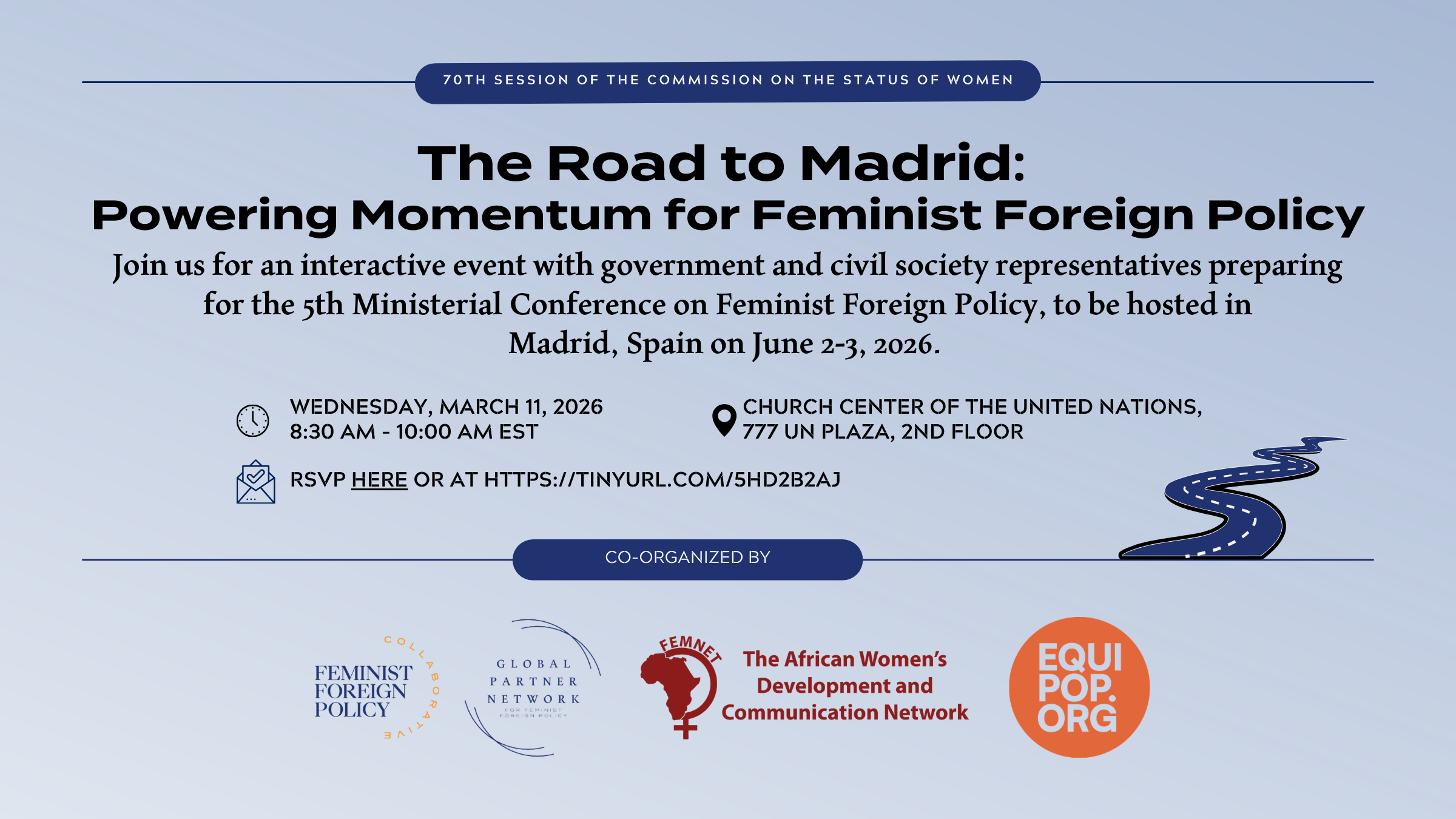
The Global Partner Network for Feminist Foreign Policy organized an interactive event, featuring a series of discussions, in preparation for the 5th Ministerial Conference on Feminist Foreign Policy. The Ministerial Conference, hosted by the Government of Spain, will be held in Madrid on June 2-3, 2026. This event included three discussions with government and civil society speakers. Speakers explored:
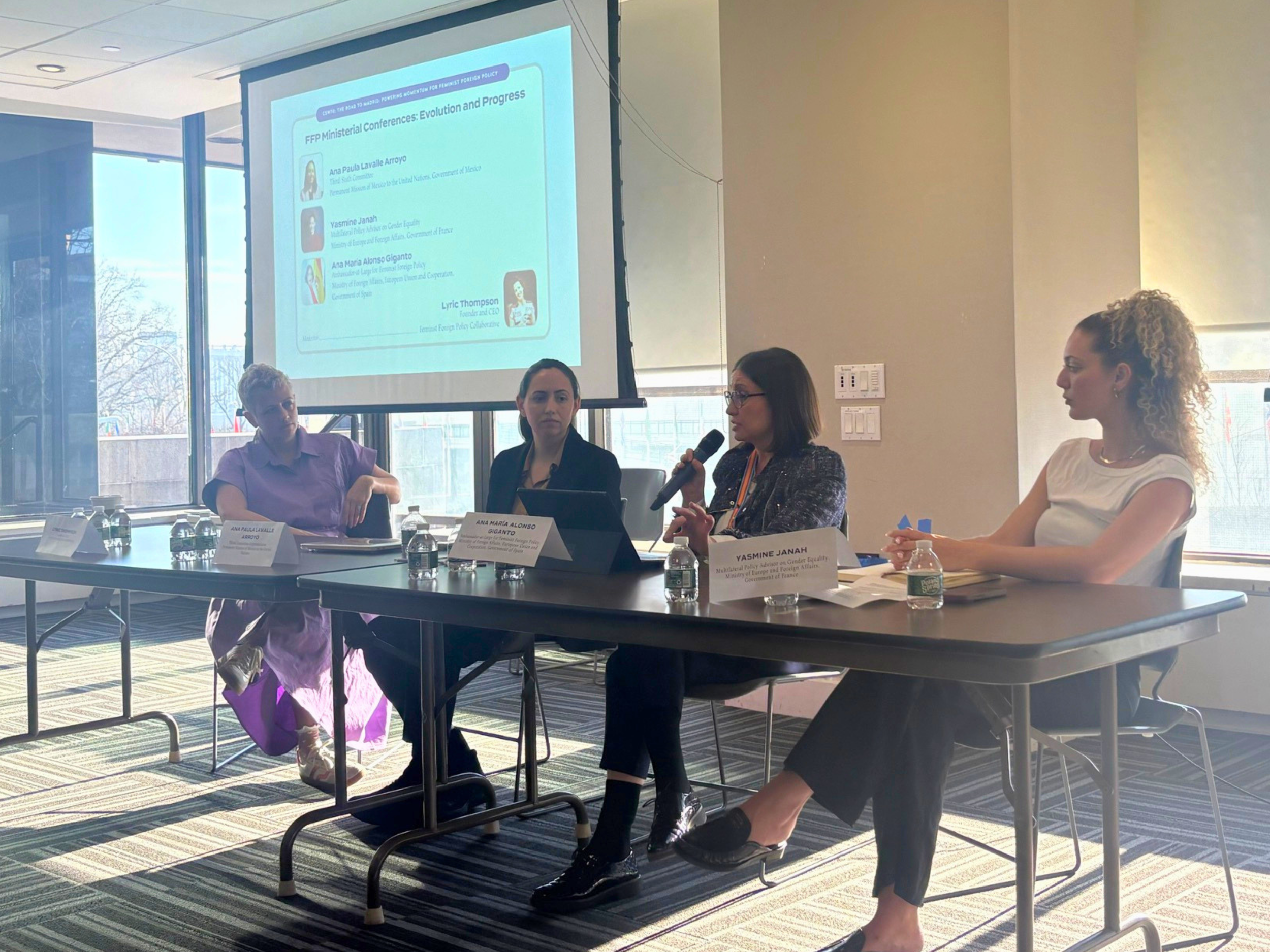
The progress and evolution of the annual FFP Ministerial Conferences,
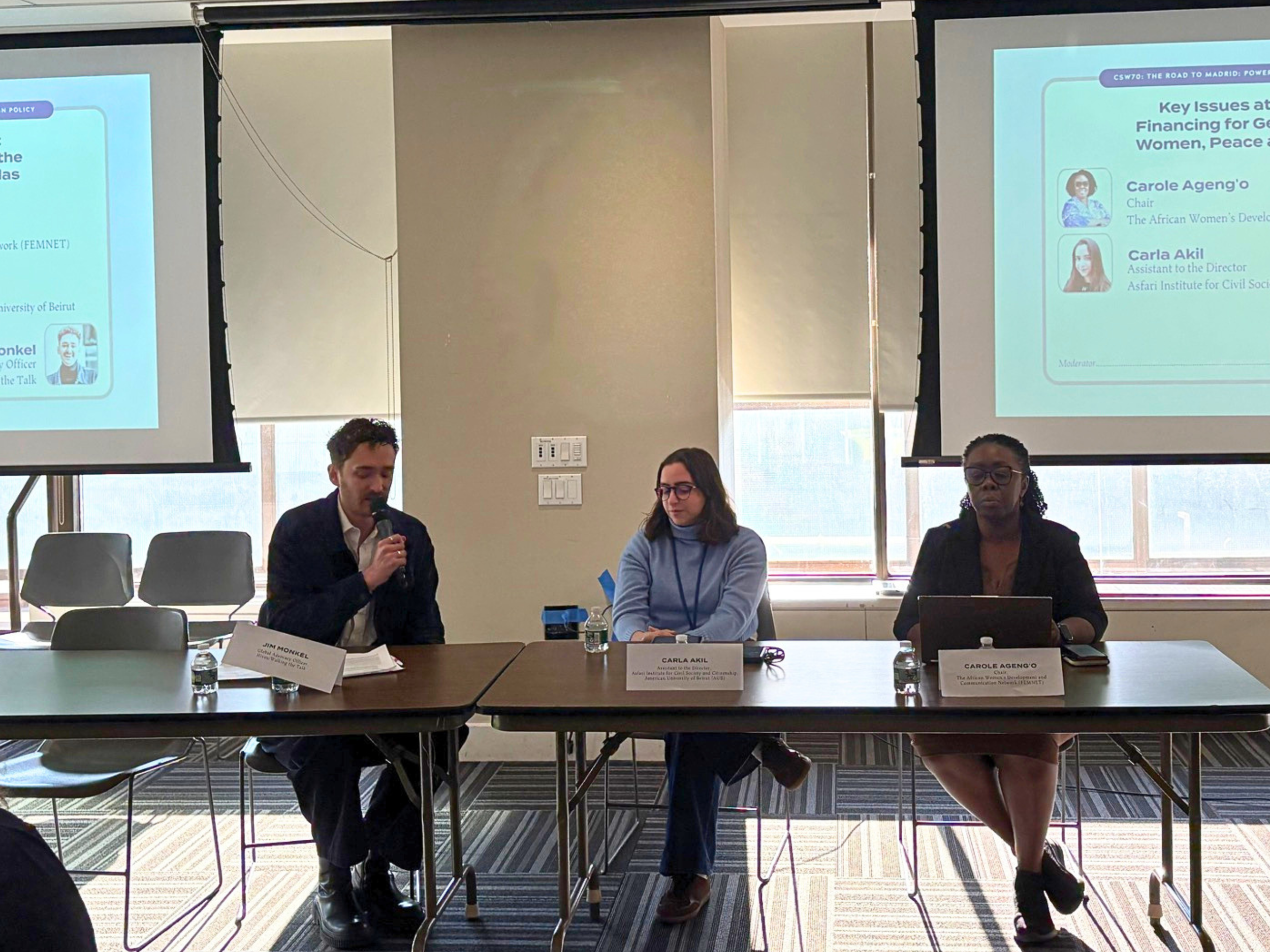
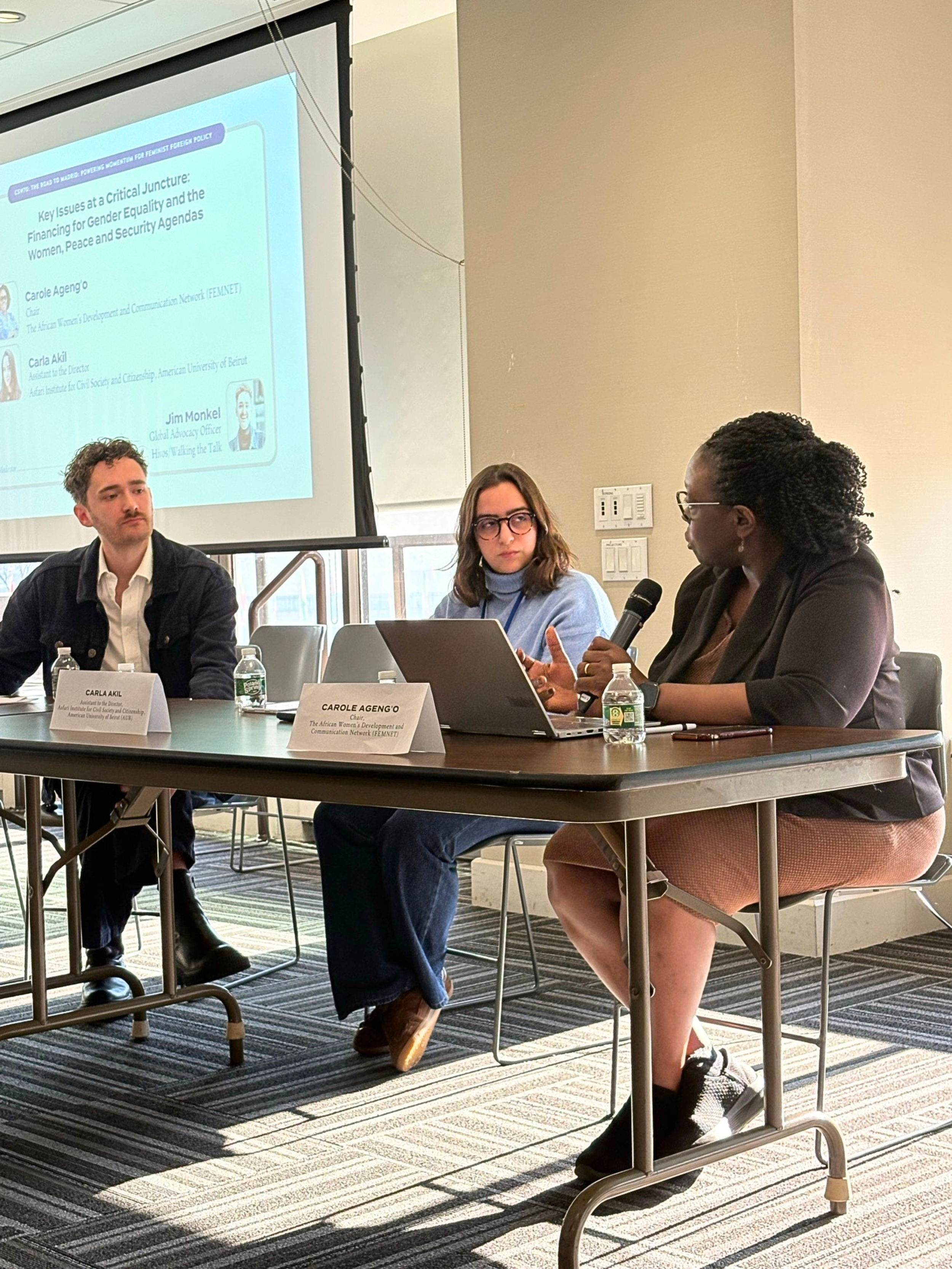
Key issues and thematic priorities (with a focus on financing for gender equality and the women, peace and security agenda) and
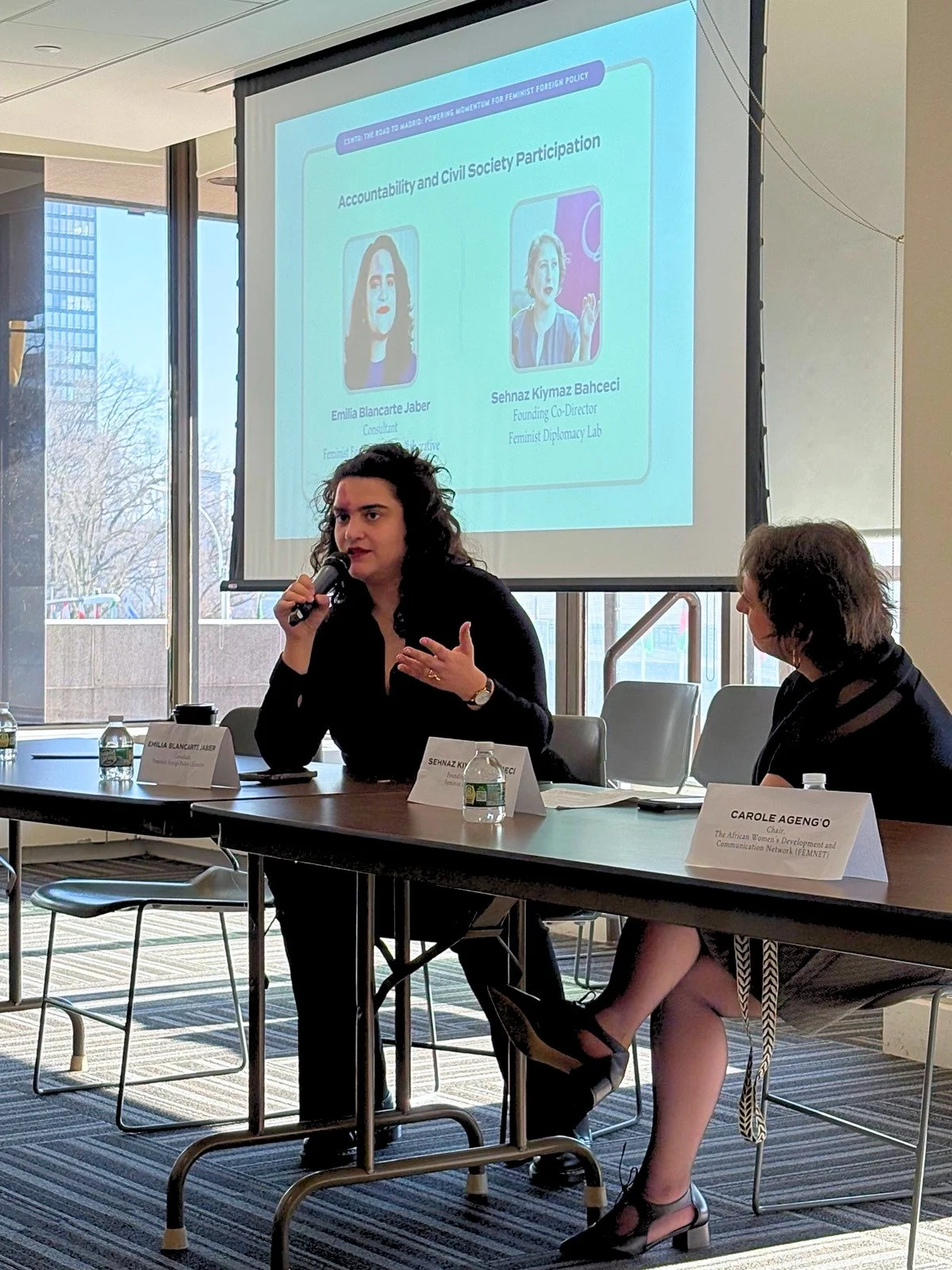
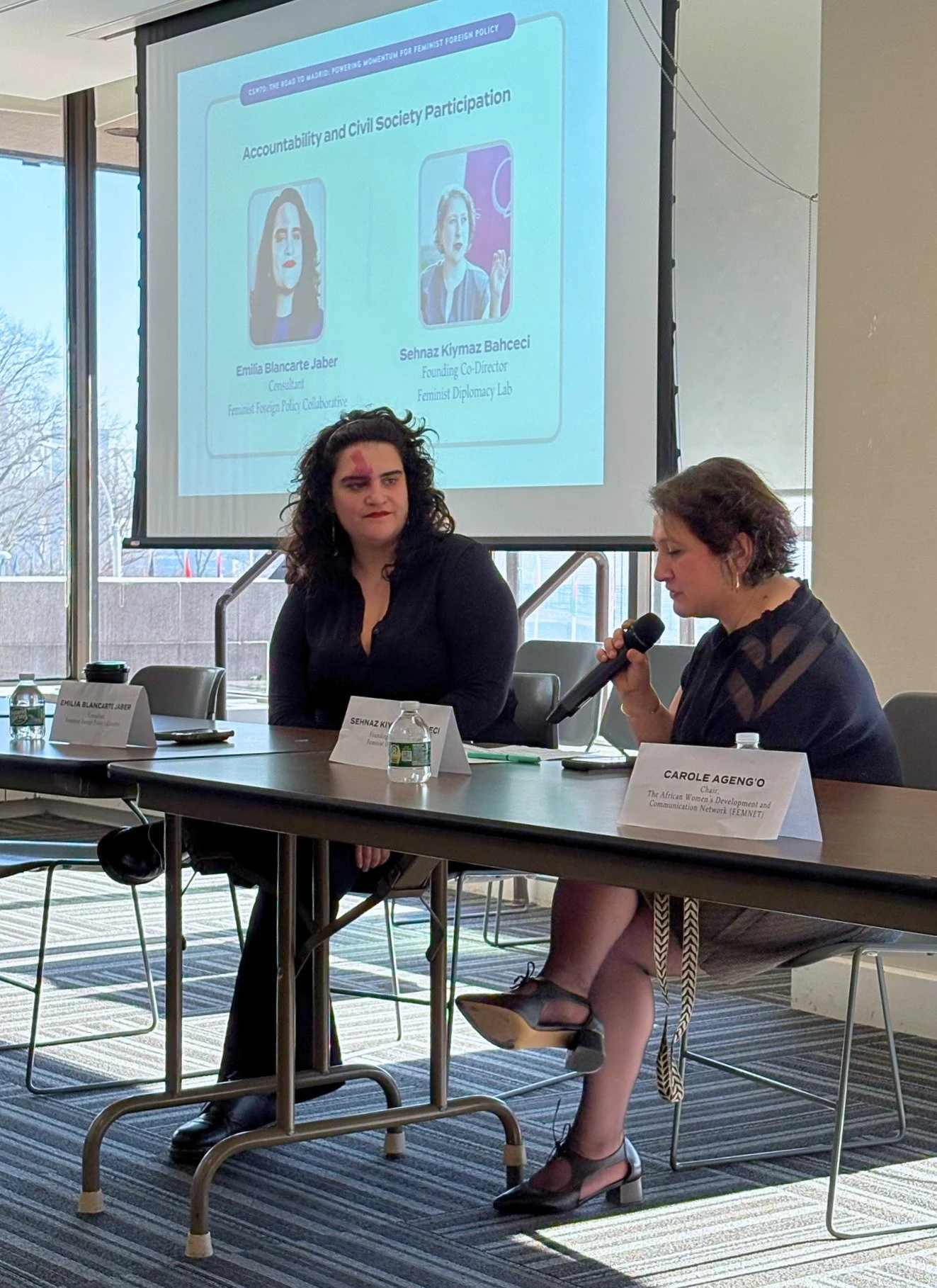
Accountability and civil society participation.
After each discussion, participants were invited to share their inputs via Mentimeter. Participant inputs were collated and submitted to the Government of Spain for consideration in their Ministerial Conference design and planning processes.
This event aimed to foster greater collaboration within the Global Partner Network, encourage transnational and cross-sectoral solidarity around the FFP agenda and sustain momentum in the lead up to and following the Ministerial Conference.
Organizers
The workshop was jointly organized by Global Partner Network for Feminist Foreign Policy members:
Speaker Highlights (ENG, ESP, FRA)
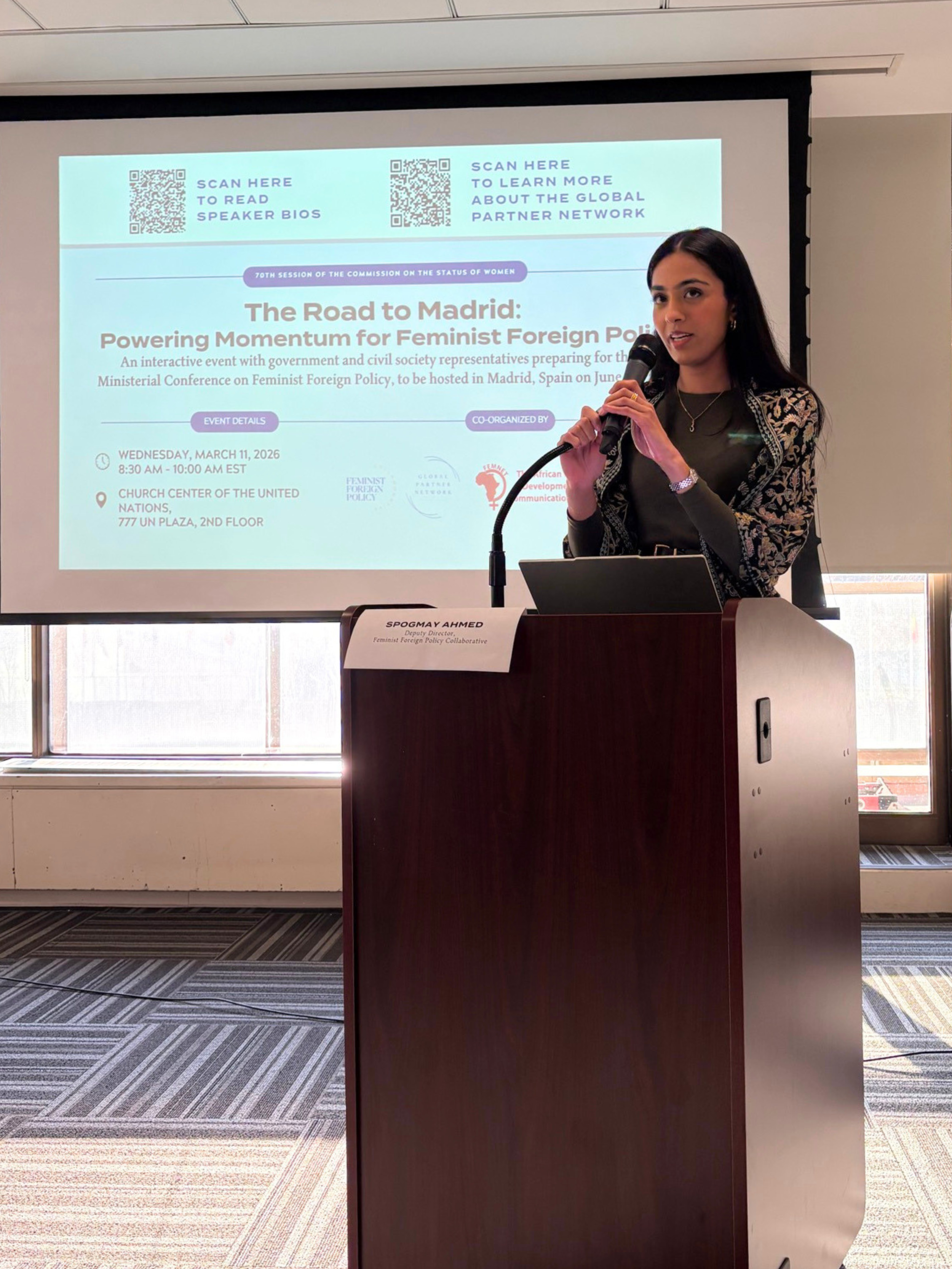
Spogmay Ahmed, Deputy Director, Feminist Foreign Policy Collaborative
ENG: Why Feminist Foreign Policy Now?
This CSW coincides with one of the most unsettling moments in modern history. Foreign policies that are grounded in competition and displays of military prowess are making us less safe. While the state of the world remains uncertain, one thing is clear: alternative visions and solutions are needed and must be supported, and one such alternative is feminist foreign policy. In all its complexities, feminist foreign policy offers a window to imagine things differently and to work toward them while bringing in new allies, testing new narratives and interrogating antiquated approaches. In a short amount of time, feminist foreign policy and its advocates have challenged how we understand security, who can design policy, and how it can support accountability. It has opened up the otherwise opaque world of foreign policy decision making, brought new actors to the table, and made possible conversations like today's, where government and civil society are in direct dialogue with one another.
ESP: ¿Por qué una política exterior feminista hoy en día?
Esta Comisión de la Condición Jurídica y Social de la Mujer coincide con uno de los momentos más inquietantes de la historia moderna. Las políticas exteriores basadas en la competencia y en la demostración de poderío militar nos están haciendo menos seguros. Aunque la situación mundial sigue siendo incierta, una cosa está clara: se necesitan visiones y soluciones alternativas que deben recibir apoyo, y una de esas alternativas es la política exterior feminista. En toda su complejidad, la política exterior feminista ofrece una ventana para imaginar las cosas de otra manera y trabajar para conseguirlas, al tiempo que atrae a nuevos aliados, pone a prueba nuevas narrativas y cuestiona enfoques anticuados. En poco tiempo, la política exterior feminista y sus defensores han cuestionado cómo entendemos la seguridad, quién puede diseñar las políticas y cómo estas pueden fomentar la rendición de cuentas. Ha abierto el mundo, por lo demás opaco, de la toma de decisiones en materia de política exterior, ha traído a la mesa a nuevos actores y ha hecho posibles conversaciones como la de hoy, en las que el gobierno y la sociedad civil mantienen un diálogo directo entre sí.
FRA : Pourquoi une politique étrangère féministe aujourd'hui ?
Cette session de la Commission de la condition de la femme coïncide avec l’une des périodes les plus troublantes de l’histoire moderne. Les politiques étrangères fondées sur la concurrence et la démonstration de puissance militaire compromettent notre sécurité. Alors que la situation mondiale reste incertaine, une chose est claire : des visions et des solutions alternatives sont nécessaires et doivent être soutenues, et l’une de ces alternatives est la politique étrangère féministe. Dans toute sa complexité, la politique étrangère féministe offre une ouverture pour imaginer les choses différemment et œuvrer en ce sens, tout en ralliant de nouveaux alliés, en testant de nouveaux récits et en remettant en question des approches obsolètes. En peu de temps, la politique étrangère féministe et ses défenseurs ont remis en question notre conception de la sécurité, la question de savoir qui peut élaborer les politiques et comment celles-ci peuvent favoriser la responsabilité. Elle a ouvert le monde autrement opaque de la prise de décision en matière de politique étrangère, a fait intervenir de nouveaux acteurs et a rendu possibles des conversations comme celle d’aujourd’hui, où le gouvernement et la société civile dialoguent directement l’un avec l’autre.
Ana Paula Lavalle Arroyo, Third and Sixth Committee Representative, Permanent Mission of Mexico to the United Nations, Government of Mexico
ENG : Reflections from the 3rd Ministerial Conference on Feminist Foreign Policy (Mexico, 2024)
It was an honor for Mexico to host the 3rd Ministerial Conference on Feminist Foreign Policy in July 2024; it represented an important milestone for several reasons. First, it was the first Ministerial Conference on feminist foreign policy in the Global South and the first of its kind to be convened in an intergovernmental level with strong participation from civil society and international organizations. Secondly, the conference intentionally sought to bring forward perspectives that are sometimes underrepresented in global policy debates, particularly those in Latin America and the Caribbean. We were convinced that advancing feminist foreign policy requires listening to diverse regional experiences and acknowledging the structural inequalities that shape them […] Three themes that that emerged strongly from the discussions were the need for feminist foreign policy and sustainable development to recognize the importance of care work, rights-based and gender-responsive migration and asylum policies and intersectionality […] Looking ahead to Madrid, Mexico believes that the next Ministerial Conference represents a very important opportunity to build on this momentum, but also to reflect on what's happening here at the UN and the challenges that we're facing, and to realize that together we are stronger.
ESP: Reflexiones de la III Conferencia Ministerial sobre Política Exterior Feminista (México, 2024)
Para México fue un honor acoger la tercera Conferencia Ministerial sobre Política Exterior Feministaen julio de 2024; este evento supuso un hito importante por varias razones. En primer lugar, fue la primera Conferencia Ministerial sobre política exterior feminista celebrada en el Sur Global y la primera de este tipo que se convocó a nivel intergubernamental con una fuerte participación de la sociedad civil y de organizaciones internacionales. En segundo lugar, la conferencia buscó deliberadamente dar a conocer perspectivas que a veces están infrarrepresentadas en los debates políticos mundiales, en particular las de América Latina y el Caribe. Estábamos convencidos de que para impulsar la política exterior feminista es necesario escuchar las diversas experiencias regionales y reconocer las desigualdades estructurales que las conforman [...] Tres temas que surgieron con fuerza de los debates fueron la necesidad de que la política exterior feminista y el desarrollo sostenible reconozcan la importancia del trabajo de cuidados, las políticas de migración y asilo basadas en los derechos y sensibles al género, y la interseccionalidad [...] Mirando hacia Madrid, México considera que la próxima Conferencia Ministerial representa una oportunidad muy importante para aprovechar este impulso, pero también para reflexionar sobre lo que está sucediendo aquí en la ONU y los retos a los que nos enfrentamos, y para darnos cuenta de que juntos somos más fuertes.
FRA : Réflexions issues de la 3e Conférence ministérielle sur la politique étrangère féministe (Mexique, 2024)
Ce fut un honneur pour le Mexique d'accueillir la troisième Conférence ministérielle sur la politique étrangère féministe en juillet 2024 ; cet événement a marqué une étape importante à plusieurs égards. Tout d'abord, il s'agissait de la première conférence ministérielle sur la politique étrangère féministe organisée dans les pays du Sud et de la première du genre à se tenir au niveau intergouvernemental, avec une forte participation de la société civile et des organisations internationales. Deuxièmement, la conférence a délibérément cherché à mettre en avant des perspectives parfois sous-représentées dans les débats politiques mondiaux, en particulier celles de l’Amérique latine et des Caraïbes. Nous étions convaincus que pour faire progresser la politique étrangère féministe, il fallait écouter les diverses expériences régionales et reconnaître les inégalités structurelles qui les façonnent [...] Trois thèmes sont clairement ressortis des discussions : la nécessité pour la politique étrangère féministe et le développement durable de reconnaître l’importance du travail de soins, des politiques de migration et d’asile fondées sur les droits et sensibles au genre, ainsi que l’intersectionnalité [...] Dans la perspective de Madrid, le Mexique estime que la prochaine Conférence ministérielle représente une occasion très importante de tirer parti de cette dynamique, mais aussi de réfléchir à ce qui se passe ici à l’ONU et aux défis auxquels nous sommes confrontés, et de prendre conscience qu’ensemble, nous sommes plus forts.
Yasmine Janah, Multilateral Policy Advisor on Gender Equality, Ministry of Europe and Foreign Affairs, Government of France
ENG: Reflections from the 4th Ministerial Conference on Feminist Foreign Polici (Paris, 2025)
With the [4th Ministerial Conference on Feminist Foreign Policies], we wanted to reaffirm international commitments and normative frameworks because it is the pinnacle of the backlash that we're facing in multilateral arenas and negotiations. The second goal was to broaden the traditional, usual crowd of countries and invite ones that are allies that are pivotal in our conversation on human rights and other issues, including security and peace. I'm thinking about the UN Security Council but also member states that are incredibly important to push the gender equality agenda internationally. And third, we wanted to establish gender equality as a fully fledged geopolitical issue, to say feminist policy and gender equality is a geopolitical issue. Those three elements built the structure of how we thought about the conference, but also how we thought about the Political Declaration.
ESP: Reflexiones de la IV Conferencia Ministerial sobre Política Exterior Feminista (París, 2025)
Con la [4.ª Conferencia Ministerial sobre Políticas Exteriores Feministas], queríamos reafirmar los compromisos internacionales y los marcos normativos, ya que nos encontramos en el punto álgido de la reacción contraria a la que nos enfrentamos en los foros multilaterales y las negociaciones. El segundo objetivo era ampliar el grupo tradicional y habitual de países e invitar a aquellos aliados que son fundamentales en nuestro diálogo sobre derechos humanos y otras cuestiones, incluidas la seguridad y la paz. Pienso en el Consejo de Seguridad de la ONU, pero también en los Estados miembros que son increíblemente importantes para impulsar la agenda de la igualdad de género a nivel internacional. Y en tercer lugar, queríamos establecer la igualdad de género como una cuestión geopolítica de pleno derecho, para afirmar que la política feminista y la igualdad de género son una cuestión geopolítica. Esos tres elementos conformaron la estructura de cómo concebimos la conferencia, pero también cómo concebimos la Declaración Política.
FRA : Réflexions issues de la 4e Conférence ministérielle des diplomaties féministes (Paris, 2025)
Avec la [4e Conférence ministérielle des diplomaties féministes], nous avons voulu réaffirmer les engagements internationaux et les cadres normatifs, car nous sommes confrontés à un véritable retour de bâton dans les instances multilatérales et les négociations. Le deuxième objectif était d’élargir le cercle traditionnel des pays participants et d’inviter des alliés qui jouent un rôle central dans notre débat sur les droits de l’homme et d’autres questions, notamment la sécurité et la paix. Je pense au Conseil de sécurité des Nations unies, mais aussi aux États membres qui jouent un rôle extrêmement important pour faire avancer le programme en faveur de l’égalité des sexes au niveau international. Et troisièmement, nous voulions faire de l’égalité des sexes un enjeu géopolitique à part entière, pour affirmer que la politique féministe et l’égalité des sexes sont des enjeux géopolitiques. Ces trois éléments ont constitué la structure de notre réflexion sur la conférence, mais aussi sur la Déclaration politique.
Ana María Alonso Giganto, Ambassador-at-Large for Feminist Foreign Policy, Ministry of Foreign Affairs, European Union and Cooperation, Government of Spain
ENG: Expectations for the 5th Ministerial Conference on Feminist Foreign Policy (Madrid, 2026)
Conflict is growing, the rules-based order is crumbling and democracies are being attacked from inside and outside. We cannot only talk about women's issues. We have to talk about the world. We have to incorporate the perspectives of women worldwide in the [5th Ministerial Conference] and in all our discussions of security, peace and democracy We want to put sexual and reproductive health and rights (SRHR), backlash, human security, protecting democracy, finance and investment in social justice and welfare on the agenda. We also want to have an outcome document written in consultation with civil society and with the highest ambition.
ESP: Expectativas para la V Conferencia Ministerial sobre Política Exterior Feminista (Madrid, 2026)
El conflicto va en aumento, el orden basado en normas se está desmoronando y las democracias están siendo atacadas tanto desde dentro como desde fuera. No podemos limitarnos a hablar de cuestiones relacionadas con las mujeres. Tenemos que hablar del mundo. Tenemos que incorporar las perspectivas de las mujeres de todo el mundo en la [5.ª Conferencia Ministerial] y en todos nuestros debates sobre seguridad, paz y democracia. Queremos incluir en la agenda la salud y los derechos sexuales y reproductivos (SRHR), la reacción conservadora, la seguridad humana, la protección de la democracia, las finanzas y la inversión en justicia social y bienestar. También queremos que se redacte un documento final en consulta con la sociedad civil y con la máxima ambición.
FRA : Attentes concernant la 5e Conférence ministérielle sur la politique étrangère féministe (Madrid, 2026)
Les conflits s'intensifient, l'ordre fondé sur des règles s'effrite et les démocraties sont attaquées tant de l'intérieur que de l'extérieur. Nous ne pouvons pas nous contenter de parler des questions relatives aux femmes. Nous devons parler du monde. Nous devons intégrer les perspectives des femmes du monde entier dans la [5e Conférence ministérielle] et dans toutes nos discussions sur la sécurité, la paix et la démocratie. Nous voulons inscrire à l’ordre du jour la santé et les droits sexuels et reproductifs (SDSR), les réactions négatives, la sécurité humaine, la protection de la démocratie, le financement et l’investissement dans la justice sociale et le bien-être. Nous voulons également un document final rédigé en consultation avec la société civile et empreint de la plus grande ambition.
Jim Monkel, Global Advocacy Officer, Hivos/Walking the Talk
ENG: Linking the Feminist Foreign Policy and Financing for Development Agendas
I would like to set the stage on the interlinkages between two important agendas [...] feminist foreign policy and financing for development, specifically, the Fourth International Conference on Financing for Development (FFD4) hosted by Spain in Seville last summer. The connection between feminist foreign policy and financing for development is both structural and political. As we move towards the Madrid Conference, bringing together the feminist foreign policy and financing for development agendas allows us to align political commitments, financial systems and accountability mechanisms that fully resource gender, gender equality, peace and democracy.
ESP: Vinculación entre la política exterior feminista y las agendas de financiación para el desarrollo
Me gustaría sentar las bases sobre las interrelaciones entre dos agendas importantes[...] la política exterior feminista y la financiación para el desarrollo, concretamente la Cuarta Conferencia Internacional sobre la Financiación para el Desarrollo (FFD4), celebrada en Sevilla (España) el verano pasado. La conexión entre la política exterior feminista y la financiación para el desarrollo es tanto estructural como política. A medida que nos acercamos a la Conferencia de Madrid, la unión de las agendas de política exterior feminista y financiación para el desarrollo nos permite armonizar los compromisos políticos, los sistemas financieros y los mecanismos de rendición de cuentas que destinan recursos suficientes al género, la igualdad de género, la paz y la democracia.
FRA : Établir un lien entre la politique étrangère féministe et les programmes de financement du développement
Je voudrais mettre en perspective les liens qui unissent deux axes prioritaires [...] : la politique étrangère féministe et le financement du développement, et plus particulièrement la quatrième Conférence internationale sur le financement du développement (CIFD4), organisée par l’Espagne à Séville l’été dernier. Le lien entre la politique étrangère féministe et le financement du développement est à la fois structurel et politique. À l’approche de la Conférence de Madrid, la convergence des agendas de la politique étrangère féministe et du financement du développement nous permet d’aligner les engagements politiques, les systèmes financiers et les mécanismes de responsabilité afin de consacrer des ressources suffisantes à la question du genre, à l’égalité des sexes, à la paix et à la démocratie.
Carole Ageng'o, Chair, The African Women’s Development and Communication Network (FEMNET)
ENG: Pan-African Feminist Priorities for Feminist Foreign Policy Leaders
If you look at feminist foreign policy as a state strategy [...] then we must talk about nondiscrimination, the transformation of power and also look at it from an intersectional perspective, but also look at the contextual issues….So how would I like to see feminist foreign policy leaders carry forward some of this work? I’ve got four main points. The first is that we must scale the intersectional and multilateral approach to women's rights that sits at the core of feminist foreign policy and the aspirations of the collective in addressing other issues, such as climate change, peace and security, inclusive growth, global health policy, poverty alleviation. Oftentimes, these issues take a neutral approach which entrenches the patriarchal norms that make it difficult for women to enjoy their rights. Secondly, we must encourage horizontal, not just vertical, approaches to integrating gender-responsive measures in policy and program efforts…. Third, we must use data from a broad range of sources to inform the resource dimension of feminist foreign policy. Finally, we must popularize the use of feminist evaluation techniques when we measure and put out our indicators for measuring how we are doing, then we must bring this down to the meso level. We cannot keep it at the macro level, because then we miss out on the stories of women.
ESP: Prioridades feministas panafricanas para las líderes de la política exterior feminista
Si consideramos la política exterior feminista como una estrategia estatal [...], entonces debemos hablar de la no discriminación y de la transformación del poder, y abordarla desde una perspectiva interseccional, pero también tener en cuenta las cuestiones contextuales... Entonces, ¿cómo me gustaría que las líderes de la política exterior feminista llevaran adelante parte de este trabajo? Tengo cuatro puntos principales. El primero es que debemos ampliar el enfoque interseccional y multilateral de los derechos de las mujeres, que constituye el núcleo de la política exterior feminista y de las aspiraciones del colectivo, para abordar otras cuestiones, como el cambio climático, la paz y la seguridad, el crecimiento inclusivo, la política sanitaria mundial y la lucha contra la pobreza. A menudo, estas cuestiones se abordan desde un enfoque neutral que afianza las normas patriarcales que dificultan que las mujeres disfruten de sus derechos. En segundo lugar, debemos fomentar enfoques horizontales, y no solo verticales, para integrar medidas sensibles al género en las iniciativas de políticas y programas... En tercer lugar, debemos utilizar datos procedentes de una amplia gama de fuentes para fundamentar la dimensión de recursos de la política exterior feminista. Por último, debemos popularizar el uso de técnicas de evaluación feministas cuando medimos y publicamos nuestros indicadores para evaluar nuestro desempeño; luego, debemos trasladar esto al nivel meso. No podemos mantenerlo en el nivel macro, porque entonces nos perdemos las historias de las mujeres.
FRA : Priorités féministes panafricaines pour les responsables de la politique étrangère féministe
Si l'on considère la politique étrangère féministe comme une stratégie d'État [...], alors nous devons parler de non-discrimination, de transformation des rapports de pouvoir, et l'aborder sous un angle intersectionnel, mais aussi tenir compte des enjeux contextuels… Comment aimerais-je donc que les responsables de la politique étrangère féministe poursuivent ce travail ? J'ai quatre points principaux. Le premier est que nous devons étendre l'approche intersectionnelle et multilatérale des droits des femmes, qui est au cœur de la politique étrangère féministe et des aspirations de la collectivité, à d'autres questions telles que le changement climatique, la paix et la sécurité, la croissance inclusive, la politique de santé mondiale et la réduction de la pauvreté. Souvent, ces questions sont abordées avec une approche neutre qui renforce les normes patriarcales qui empêchent les femmes de jouir de leurs droits. Deuxièmement, nous devons encourager des approches horizontales, et pas seulement verticales, pour intégrer des mesures sensibles au genre dans les politiques et les programmes… Troisièmement, nous devons utiliser des données provenant d’un large éventail de sources pour éclairer la dimension des ressources de la politique étrangère féministe. Enfin, nous devons généraliser l’utilisation de techniques d’évaluation féministes lorsque nous mesurons et publions nos indicateurs pour évaluer nos progrès, puis nous devons transposer cela au niveau méso. Nous ne pouvons pas nous en tenir au niveau macro, car nous passerions alors à côté des récits des femmes.
Carla Akil, Assistant to the Director, Asfari Institute for Civil Society and Citizenship, American University of Beirut (AUB)
ENG: Priorities for Advancing Peace and Security in Madrid
Feminist foreign policy has generated important global momentum, but going into the Madrid Ministerial Conference, an important question remains, how can feminist foreign policy meaningfully strengthen and transform the Women, Peace and Security (WPS) agenda? Because if feminist foreign policy is serious about peace, it must engage directly with the political and structural realities of conflict. The WPS agenda has emphasized the importance of women’s political participation in peace processes, protection from violence and conflict prevention. However, in many conflict-affected contexts, security policy remains overwhelmingly militarized and state-centric, focusing on defense spending and geopolitical competition rather than on the everyday security of people. This is where feminist foreign policy can play a transformative role. Feminist foreign policy can help expand the WPS agenda by doing three different things. One of them is shifting the focus from military security to human security. Second is recognizing that economic justice, care systems and social protection are centered on sustainable peace. The third point is addressing the structural drivers of conflict, including inequality, exclusion and political marginalization. In other words, feminist foreign policy should not sit alongside WPS, it should reinforce and operationalize it with foreign policy and international cooperation.
ESP: Prioridades para promover la paz y la seguridad en Madrid
La política exterior feminista ha generado un importante impulso a nivel mundial, pero de cara a la Conferencia Ministerial de Madrid sigue planteándose una cuestión fundamental: ¿cómo puede la política exterior feminista reforzar y transformar de manera significativa la agenda «Mujeres, Paz y Seguridad» (MPS)? Porque si la política exterior feminista se toma en serio la paz, debe abordar directamente las realidades políticas y estructurales de los conflictos. La agenda MPS ha hecho hincapié en la importancia de la participación política de las mujeres en los procesos de paz, la protección frente a la violencia y la prevención de conflictos. Sin embargo, en muchos contextos afectados por conflictos, la política de seguridad sigue estando abrumadoramente militarizada y centrada en el Estado, centrándose en el gasto en defensa y la competencia geopolítica en lugar de en la seguridad cotidiana de las personas. Aquí es donde la política exterior feminista puede desempeñar un papel transformador. La política exterior feminista puede ayudar a ampliar la agenda MPS haciendo tres cosas diferentes. Una de ellas es desplazar el foco de la seguridad militar hacia la seguridad humana. La segunda es reconocer que la justicia económica, los sistemas de cuidados y la protección social son fundamentales para una paz sostenible. El tercer punto es abordar los factores estructurales que impulsan los conflictos, entre ellos la desigualdad, la exclusión y la marginación política. En otras palabras, la política exterior feminista no debe limitarse a acompañar la agenda MPS, sino que debe reforzarla y ponerla en práctica mediante la política exterior y la cooperación internacional.
FRA : Priorités pour faire progresser la paix et la sécurité
La politique étrangère féministe a suscité un élan mondial considérable, mais à l’approche de la Conférence ministérielle de Madrid, une question importante demeure : comment la politique étrangère féministe peut-elle renforcer et transformer de manière significative le programme « Femmes, paix et sécurité » (FPS) ? Car si la politique étrangère féministe prend la paix au sérieux, elle doit s’attaquer directement aux réalités politiques et structurelles des conflits. Le programme FPS a souligné l’importance de la participation politique des femmes aux processus de paix, de leur protection contre la violence et de la prévention des conflits. Cependant, dans de nombreux contextes touchés par des conflits, la politique de sécurité reste extrêmement militarisée et centrée sur l’État, mettant l’accent sur les dépenses de défense et la concurrence géopolitique plutôt que sur la sécurité quotidienne des populations. C’est là que la politique étrangère féministe peut jouer un rôle transformateur. La politique étrangère féministe peut contribuer à élargir l’agenda FPS en agissant de trois manières différentes. La première consiste à déplacer l’accent de la sécurité militaire vers la sécurité humaine. La deuxième consiste à reconnaître que la justice économique, les systèmes de soins et la protection sociale sont au cœur d’une paix durable. Le troisième point consiste à s’attaquer aux facteurs structurels des conflits, notamment les inégalités, l’exclusion et la marginalisation politique. En d’autres termes, la politique étrangère féministe ne doit pas se contenter de coexister avec le FPS, elle doit le renforcer et le mettre en œuvre à travers la politique étrangère et la coopération internationale
Emilia Blancarte Jaber, Consultant, Feminist Foreign Policy Collaborative
ENG: Pursuing Accountability at the Annual Ministerial Conferences on Feminist Foreign Policy
Is accountability building these international processes in a way that is meaningful for us? What can we do as civil society to push this forward in the spaces where these agendas are being created? Having [civil society] be in the driver's seat of creating new mechanisms, of creating more democratic ways of building international agendas is essential [...] which is why I’m pleased to be here today to talk to you about the development of the FFP Accountability project I’m supporting through the Feminist Foreign Policy Collaborative. Managed by the Collaborative with support from the Ministry for Europe and Foreign Affairs of the Government of France, FFP Accountability tracks commitments made at the Fourth Ministerial Conference on Feminist Foreign Policies, held in October 2025 in Paris, France. Bringing my experience with accountability design that I garnered through my work with the Generation Equality Forum and with the Global Fund for Women, I am leading the iteration of an accountability framework to track progress on over 20 commitments made by states and institutions last year in Paris. We hope to release a progress report mid this year and a final report before the end of 2026.
ESP: En busca de la rendición de cuentas en la Conferencia Ministerial Anual sobre Política Exterior Feminista
¿Se está fomentando la rendición de cuentas en estos procesos internacionales de una manera que resulte significativa para nosotros? ¿Qué podemos hacer como sociedad civil para impulsar esto en los espacios donde se están elaborando estas agendas? Es esencial que la sociedad civil lleve las riendas a la hora de crear nuevos mecanismos y formas más democráticas de elaborar las agendas internacionales [...] por eso me complace estar aquí hoy para hablarles del desarrollo del proyecto FFP Accountability, que apoyo a través del Colaborativo de Politica Exterior Feminista con el apoyo del Ministerio de Europa y Asuntos Exteriores del Gobierno de Francia, FFP Accountability realiza un seguimiento de los compromisos adquiridos en la Cuarta Conferencia Ministerial sobre Políticas Exteriores Feministas, celebrada en octubre de 2025 en París, Francia. Aportando mi experiencia en el diseño de mecanismos de rendición de cuentas, adquirida a través de mi trabajo con el Foro Generación Igualdad y con el Fondo Global para las Mujeres, estoy liderando la elaboración de un marco de rendición de cuentas para hacer un seguimiento de los avances en más de 20 compromisos asumidos por Estados e instituciones el año pasado en París. Esperamos publicar un informe de progreso a mediados de este año y un informe final antes de que termine 2026.
FRA : Promouvoir la responsabilité lors de la Conférence ministérielle annuelle sur la politique étrangère féministe
Ces processus internationaux favorisent-ils une responsabilisation qui ait un sens pour nous ? Que pouvons-nous faire, en tant que société civile, pour faire avancer ces questions dans les espaces où ces agendas sont élaborés ? Il est essentiel que la société civile soit aux commandes de la création de nouveaux mécanismes et de la mise en place de méthodes plus démocratiques pour élaborer les agendas internationaux [...] C'est pourquoi je suis ravie d'être ici aujourd'hui pour vous parler du développement du projet FFP Accountability que je soutiens par le biais du Collectif pour une Politique Étrangère Féministe. Géré par le Collectif avec le soutien du ministère de l’Europe et des Affaires étrangères du Gouvernment de la France, FFP Accountability suit les engagements pris lors de la quatrième Conférence ministérielle des diplomaties féministes, qui s’est tenue en octobre 2025 à Paris, en France. Mettant à profit mon expérience en matière de conception de mécanismes de responsabilisation, acquise dans le cadre de mon travail avec le Forum Génération Égalité et le Fonds mondial pour les femmes, je dirige l’élaboration d’un cadre de responsabilisation visant à suivre les progrès réalisés sur plus de 20 engagements pris par les États et les institutions l’année dernière à Paris. Nous espérons publier un rapport d’étape au milieu de cette année et un rapport final avant la fin de 2026.
Sehnaz Kiymaz Bahceci, Founding Co-Director, Feminist Diplomacy Lab
ENG: Civil Society’s Essential Role In Paris and Madrid Ministerial Conferences
In terms of what real civil society engagement looks like at the Conference, it's about making sure that civil society is a part of this from the very beginning, and it's wonderful to see that mentioned in the consultation yesterday that started that process for civil society with the Spanish government towards Madrid. We're also very happy to see Spanish civil society organizations are leading a pre-conference, where civil society can come and strategize together, and to make sure that those two spaces — the Pre-Conference and the Ministerial Conference — inform each other, whether it’s a physical space for civil society like we had in the Netherlands or it’s a civil society declaration that also gets reflected in the Ministerial Declaration [like in Paris].
ESP: El papel fundamental de la sociedad civil en las conferencias ministeriales de París y Madrid
En cuanto a cómo se materializa la participación real de la sociedad civil en la Conferencia, se trata de garantizar que la sociedad civil forme parte de este proceso desde el primer momento, y es maravilloso ver que esto se mencionó en la consulta de ayer, que puso en marcha ese proceso de colaboración entre la sociedad civil y el Gobierno español de cara a Madrid. También nos alegra mucho ver que las organizaciones de la sociedad civil española están liderando una preconferencia, donde la sociedad civil puede reunirse y elaborar estrategias conjuntamente, y garantizar que esos dos espacios —la Preconferencia y la Conferencia Ministerial— se complementan mutuamente, ya sea un espacio físico para la sociedad civil como el que tuvimos en los Países Bajos o una declaración de la sociedad civil que también se refleje en la Declaración Ministerial [como en París].
FRA : Le rôle essentiel de la société civile lors des conférences ministérielles de Paris et de Madrid
Pour ce qui est de la forme que prendra la véritable participation de la société civile à la Conférence, il s'agit de veiller à ce que celle-ci soit impliquée dès le début, et c'est formidable de voir que cela a été mentionné lors de la consultation d'hier, qui a marqué le lancement de ce processus entre la société civile et le gouvernement espagnol en vue de la Conférence de Madrid. Nous sommes également très heureux de voir que des organisations de la société civile espagnole organisent une pré-conférence, où la société civile peut se réunir pour élaborer des stratégies, et de veiller à ce que ces deux espaces — la pré-conférence et la conférence ministérielle — s’enrichissent mutuellement, qu’il s’agisse d’un espace physique pour la société civile comme celui que nous avons eu aux Pays-Bas ou d’une déclaration de la société civile qui se reflète également dans la déclaration ministérielle [comme à Paris].
Biographies
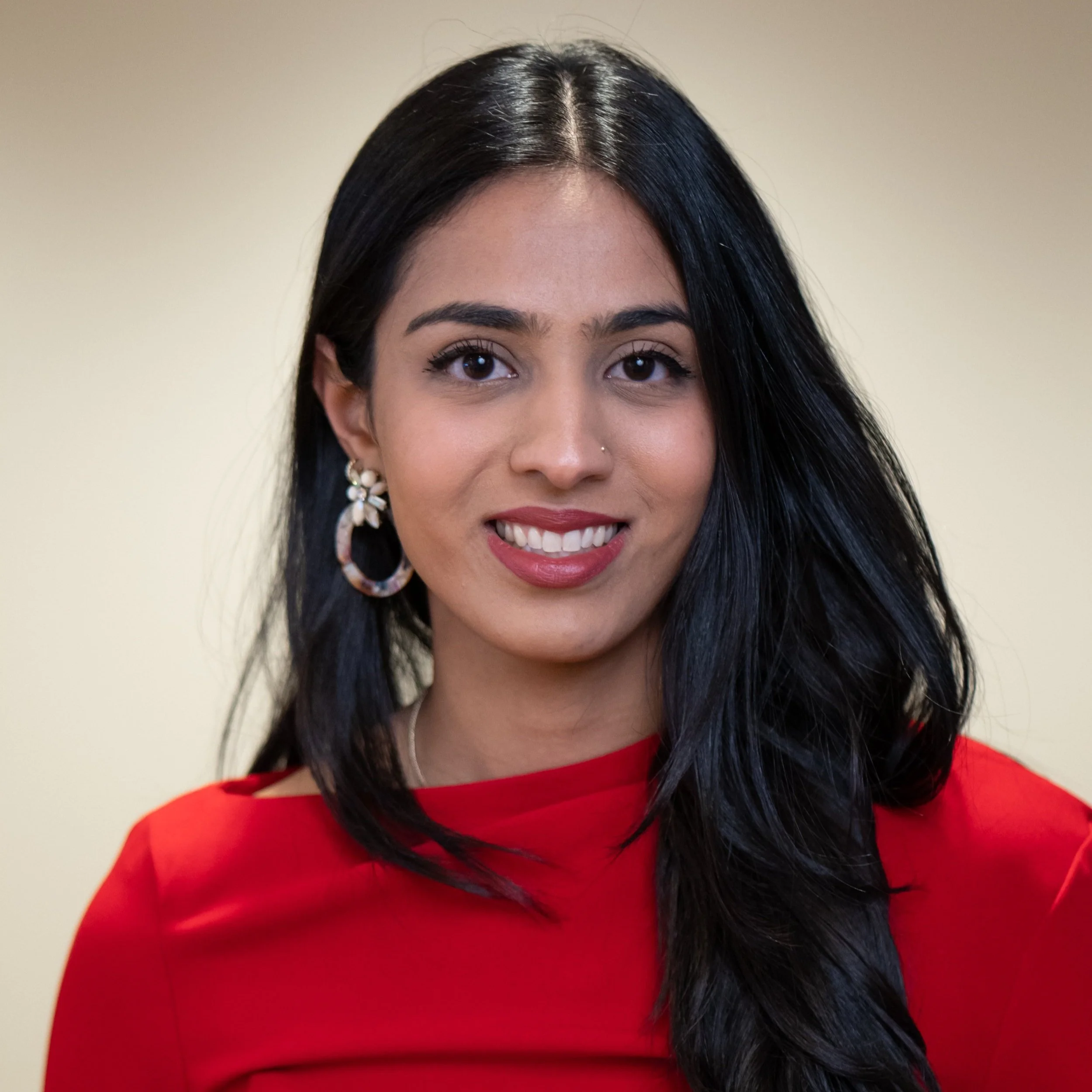
Spogmay Ahmed |
Deputy Director, Feminist Foreign Policy Collaborative
Spogmay Ahmed (she/her) is the Deputy Director for the Feminist Foreign Policy Collaborative. In this capacity, she helps manage the Global Partner Network for Feminist Foreign Policy and the Coalition for a Feminist Foreign Policy in the United States, and provides overall policy and advocacy expertise for civil society, governments and multilateral organizations. Spogmay serves as the Collaborative’s main liaison to the United Nations, and has served as a Women 7 (W7) Advisor for the G7 Presidencies of Germany in 2022, Japan in 2023, Italy in 2024 and now Canada in 2025. Prior to joining the Collaborative, Spogmay served as Senior Global Policy Advocate at the International Center for Research on Women (ICRW), handling ICRW's portfolio on feminist foreign policy globally and in the United States. She has provided policy analysis and advocacy leadership in multilateral spaces, including the United Nations, G7 and G20.

Lyric Thompson |
Founder and CEO, Feminist Foreign Policy Collaborative
Lyric Thompson (she/her) is the Founder and CEO of the Feminist Foreign Policy Collaborative, where she publishes and advises governments and thought leaders on feminist foreign policy. In her 2-decade career, she has advocated on women’s rights issues at the United Nations, G7/G20, White House, the U.S. State Department, USAID and the Department of Defense. She is an adjunct professor at the George Washington University, where she teaches a graduate level course on women’s rights advocacy. Previously, Lyric has served as: the Vice President of Policy, Advocacy, and Strategy at the International Center for Research on Women, the founding co-chair of the Coalition for Women’s Economic Empowerment and Equality, co-chair of Girls Not Brides USA, on the Executive Committee of the Civil Society Working Group on Women, Peace and Security, on the Women’s Human Rights Coordination Group of Amnesty International, USA and as the Senior Policy Manager for Women for Women International.
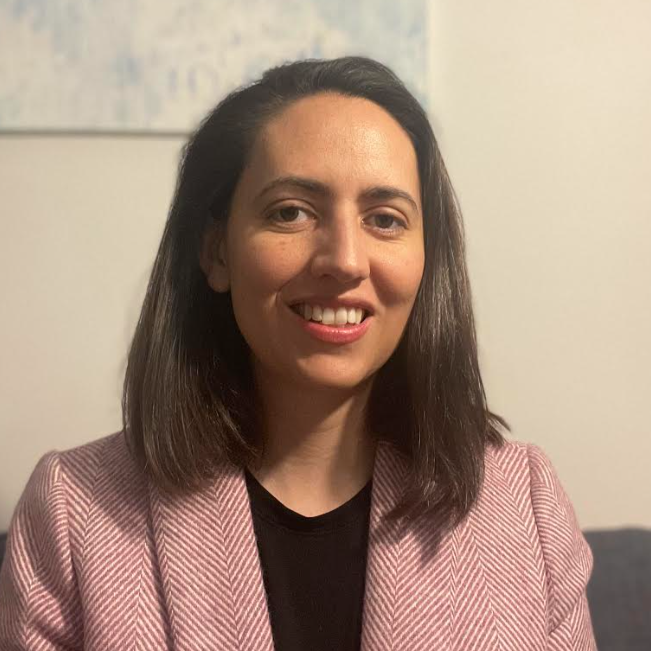
Ana Paula Lavalle Arroyo |
Third and Sixth Committee Representative, Permanent Mission of Mexico to the United Nations, Government of Mexico
Ana Paula Lavalle Arroyo (she/her) is a Mexican diplomat with extensive experience in international human rights law and multilateral diplomacy. She currently serves at the Permanent Mission of Mexico to the United Nations, where she represents Mexico in the Third Committee (Human Rights and Humanitarian Affairs) and the Sixth Committee (Legal Affairs, including Crimes Against Humanity and Terrorism).
Ana Paula has a Master’s degree in Advanced Studies in Public International Law from Leiden University and a Law degree from Universidad Panamericana. She has built a career at the Mexican Ministry of Foreign Affairs since 2010, specializing in international human rights policy, diplomacy, and legal affairs, her previous position was Coordinator for International Human Rights Policy.
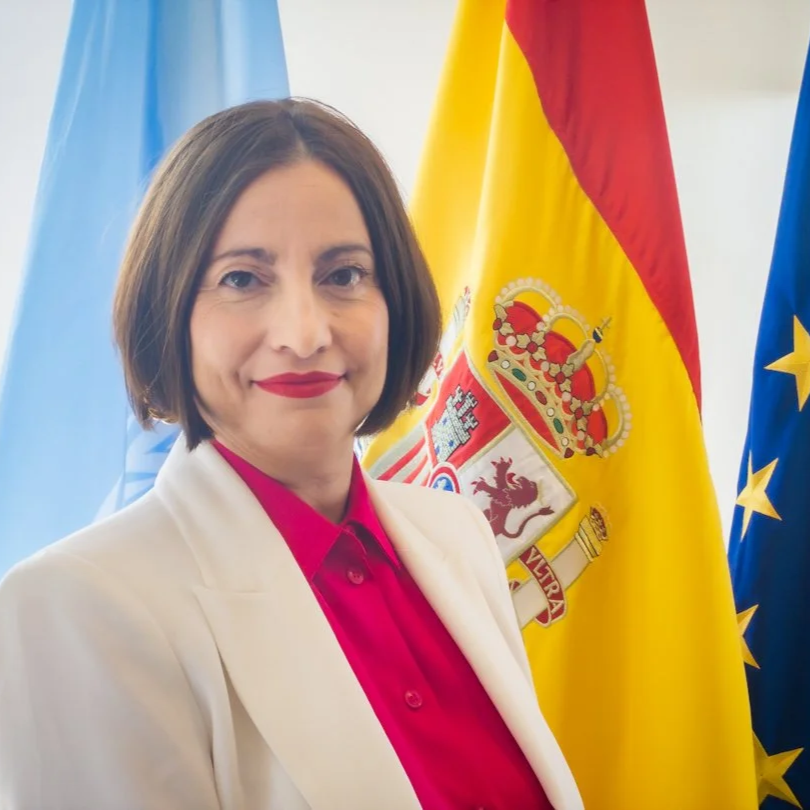
Ana María Alonso Giganto |
Ambassador-at-Large for Feminist Foreign Policy, Ministry of Foreign Affairs, European Union and Cooperation, Government of Spain
Ana María Alonso Giganto (she/her) holds a degree in English Philology and has been a member of the Spanish Diplomatic Service since 2007. She has been posted to Spanish embassies in Afghanistan, Egypt, Thailand, Australia, and Counsellor in the Mission of Spain to United Nations. As Ambassador-at-Large for Feminist Foreign Policy at the Ministry of Foreign Affairs, European Union and Cooperation (MAEC), she is responsible for mainstreaming a gender perspective throughout Spain’s foreign policy and the institutional culture of the ministry itself, as well as within international forums. Academically, she coordinates the MAEC’s course on Feminist Foreign and Development Cooperation Policy and Gender Equality. She is also a member of the Alliance of Feminist Foreign Policy Ambassadors, which includes representatives from various countries and organizations such as NATO, the EEAS, the OSCE and UN Women. She is also a member of the Advisory Board of Casa Asia and of the Global Partner Network of Feminist Foreign Policy Steering Committee.
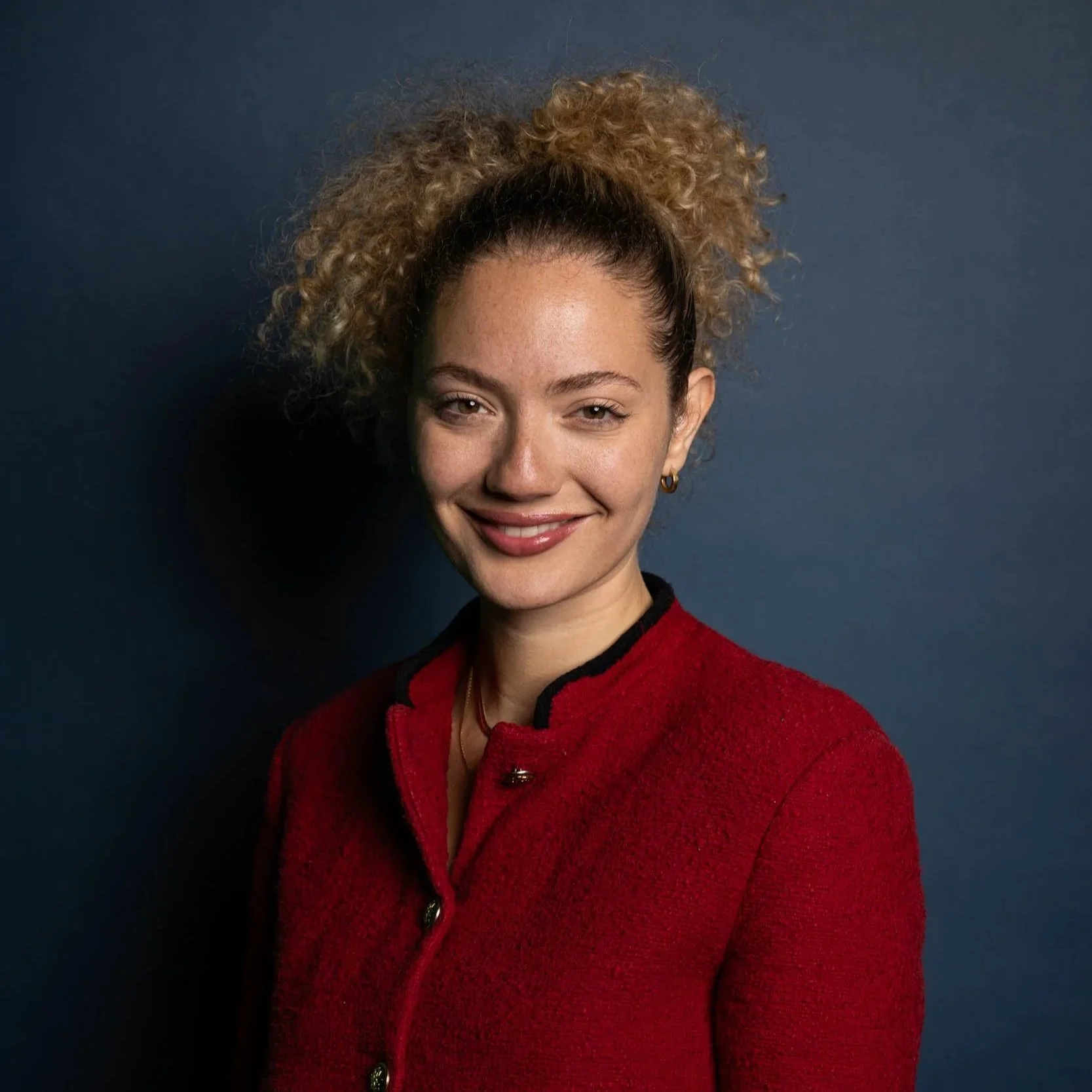
Yasmine Janah |
Multilateral Policy Advisor on Gender Equality, Ministry of Europe and Foreign Affairs, Government of France
Ms. Yasmine Janah is the Multilateral Policy Advisor on Gender Equality at the French Ministry for Europe and Foreign Affairs. She brings extensive expertise in diplomacy, gender equality, and women’s rights, with a strong focus on peacebuilding and conflict resolution. She is a member of the team that drafted France's international feminist foreign policy strategy and organized the 4th Conference on Feminist Foreign Policy last October alongside Ambassador Delphine O. She served as lead author and negotiator of its political declaration.
Prior joining the diplomatic service, Ms. Janah worked extensively in conflict-affected and fragile contexts. She held positions with swisspeace, CARE International in Morocco, the Women’s International League for Peace and Freedom in Cameroon and the Ministry of Women’s Affairs in the Republic of Congo.

Jim Monkel |
Global Advocacy Officer, Hivos
Jim Monkel (he/him) is an advocate and policy advisor whose work is grounded in connecting policy, people and practice. Jim works as Global Advocacy Officer at Hivos, for the pan-European initiative of the Walking the Talk Consortium. They work on advocating for inclusive policies and more and better funding for gender equality and feminist organizations in the Majority World, with a focus on centering a gender-lens in the Financing for Development agenda.
Previously, as Youth Ambassador for Sexual & Reproductive Health and Rights, Gender Equality and Bodily Autonomy for the Dutch Ministry of Foreign Affairs, Jim connected the lived realities of young people around the world and policymaking spaces. As an independent advisor to the Ministry, he raised the visibility of inclusive comprehensive sexuality education, specifically for young people with disabilities.
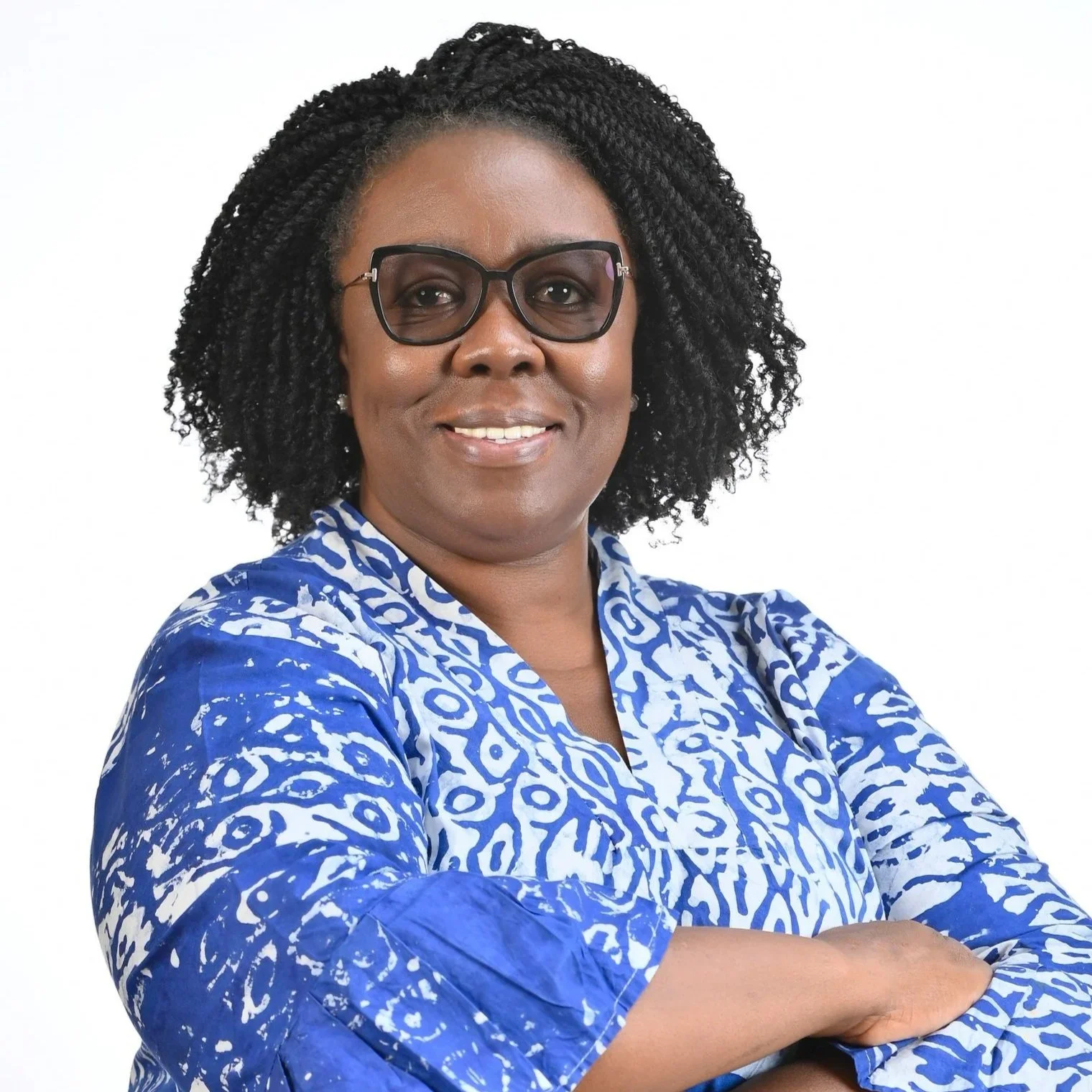
Carole Osero-Ageng'o |
Chair, The African Women’s Development and Communication Network (FEMNET)
Carole is a multilingual feminist human rights lawyer and gender expert with an impressive history of impactful high-level advocacy in national, regional, and global spaces. She is an excellent governance expert and leader and a well acquitted negotiator, people connector, mentor, and policy influencer with broad regional and global experience on ageing and gender, women’s rights, sexual reproductive health, and rights (SRHR), governance, climate change and conflict management. She has led groundbreaking advocacy in Africa and globally including the advocacy leading to the creation of the UN Working Group on Discrimination Against Women and girls. She continues to leverage her networking skills for partnerships and fundraising. She is a renowned regional convener and in May 2024 delivered a successful UN Civil Society Conference in Support of the Summit of the Future. She has led successful Boards in Africa and globally including the Initiative for Strategic Litigation in Africa. In her role as FEMNET Treasurer, she has provided leadership and guidance to the Chair and the Secretariat in the realization of the impressive results. She continues to effectively represent FEMNET In regional and global initiatives. Read more.
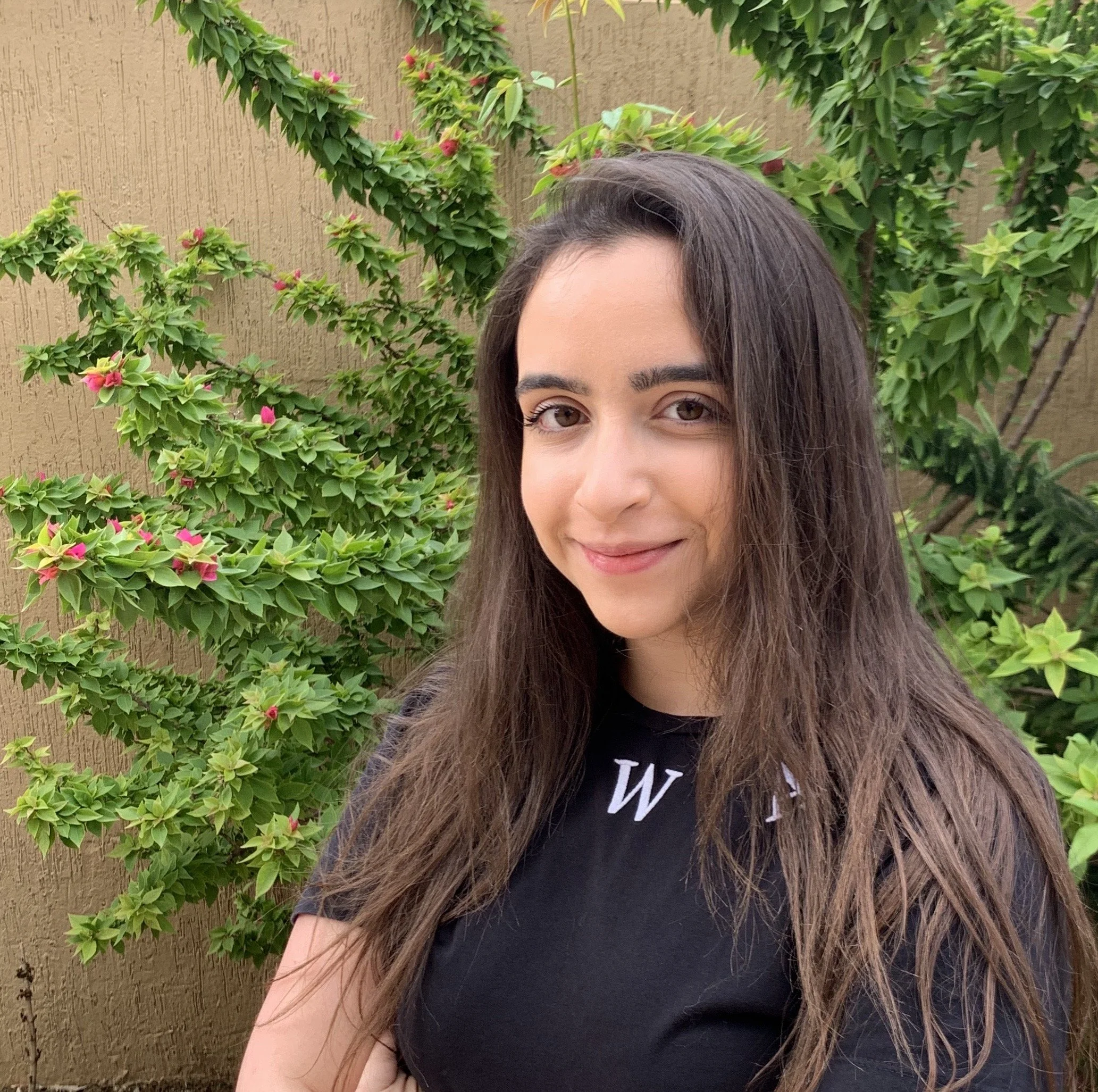
Carla Akil |
Assistant to the Director, Director of the Asfari Institute for Civil Society and Citizenship at the American University of Beirut
Carla Akil (she/her) serves as the Assistant to the Director at the Asfari Institute for Civil Society and Citizenship at the American University of Beirut (AUB), where she oversees regional projects on gender equality, feminist organizing, and civil society engagement in the SWANA/MENA region. She holds a bachelor's degree in psychology from AUB and is pursuing a Master’s in Anthropology at AUB. Her research and publications focus on feminist movements and care economies, bridging academic inquiry with activism and policy work.
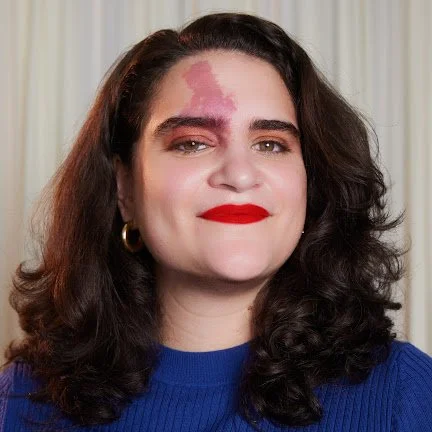
Emilia Blancarte Jaber |
Consultant, Feminist Foreign Policy Collaborative
Emilia Blancarte Jaber (she/her) is a policy and strategy expert specialising in feminist accountability, philanthropic strategy and resource mobilisation. She brings together technical rigour and political acuity to help feminist movements and their institutional partners build the systems, funding and coalitions needed to drive lasting change.
Emilia has extensive experience designing accountability frameworks at the intersection of global advocacy and institutional philanthropy. At Global Fund for Women, she developed the Feminist Accountability Framework, coordinating 35 feminist organisations and major institutional funders in a shared accountability architecture. She brings that same approach to her work with the Ministerial Conferences on Feminist Foreign Policy, where she leads the development of the accountability framework tracking state and institutional commitments across the full policy cycle.
She holds a Master's in International Public Management from Sciences Po Paris, as well as a certificate in Impact Philanthropy Advising and has previously worked in Mexico's federal government, bringing a multilateral and cross-sectoral lens to her practice. She works in English, Spanish, French and Portuguese.
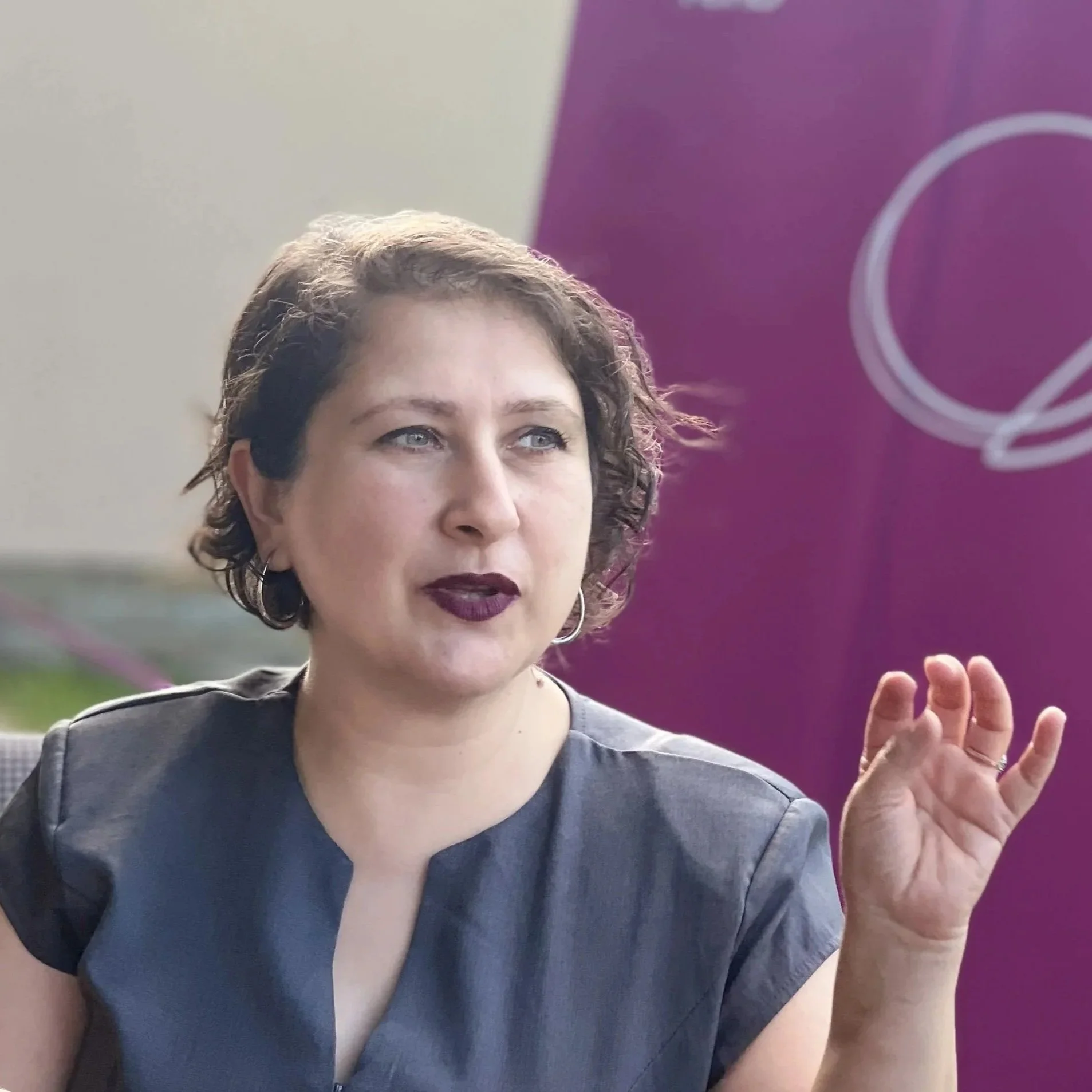
Sehnaz Kiymaz Bahceci |
Founding Co-Director, Feminist Diplomacy Lab
Sehnaz Kiymaz Bahceci (she/her) is a gender equality expert and activist with over 20 years of experience. Formerly the coordinator of the Women's Major Group, she is currently a board member for Women for Women’s Human Rights. She specializes in international processes and conventions on gender equality, the SDGs, and countering anti-gender movements. Sehnaz provides consultancies on engagement with multilateral processes, multi stakeholder partnerships, and civil society inclusion towards progress on gender equality. She recently co-founded the Feminist Diplomacy Lab, an interactive action platform for gender equality. She holds an MA in Gender and Women’s Studies and degrees in Biology and Sociology/Anthropology.